Kitesurfing right of way: the rules that stop collisions
Why don’t they crash when there are thousands of kites? Because there are rules.
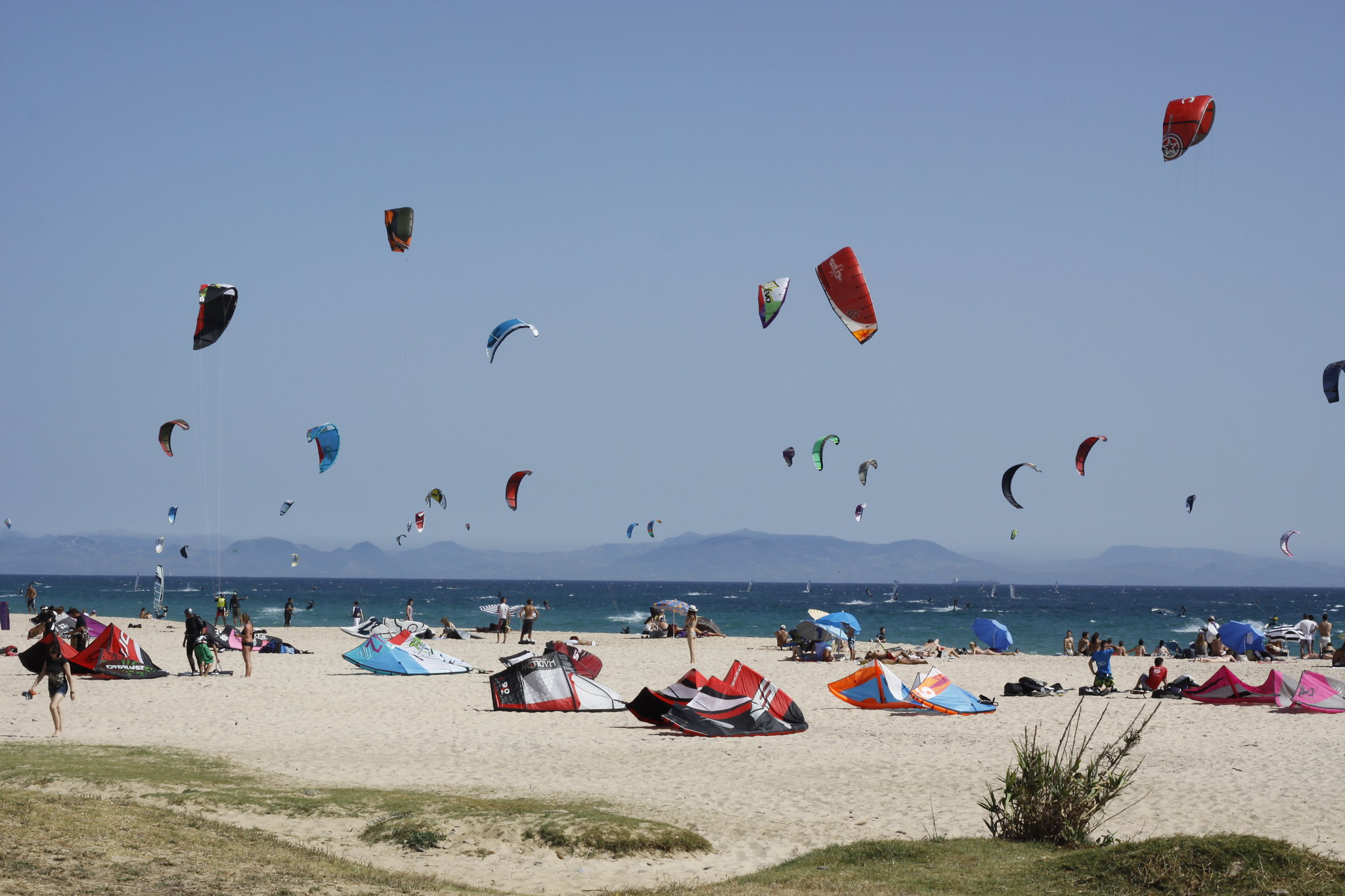
On a windy day at busy spots like Valdevaqueros or Los Lances Norte in Tarifa, the water fills up with kites. Why don’t they crash? Because there are rules.
This article is the written version of our video: two right-of-way rules and one golden rule, as taught by the IKO (International Kiteboarding Organization).
Where these rules come from
There is no single official rulebook for kitesurfing. These are conventions from schools and associations, and the IKO course itself says so. That is why each spot’s local rules come first: if a beach has its own, those apply.
A word on terms before we start: here going out means leaving the beach for the open water, and coming in means heading back to the beach.
Rule 1: the rider going out has priority
When one rider is going out from the beach and another is coming in, the one going out goes first. The one coming in gives way: they change course, for example by bearing away downwind, and let the other through. In the video you see it from above: the rider coming in bends their track and passes downwind of the rider going out, who keeps going straight.
Why? The rider going out has the shore, the waves and the people right behind them. They have nowhere to go. The rider coming in has the whole sea to wait in. The IKO adds another reason: near land the wind is gustier.
Rule 2: head-on, look at your hand
Out at sea, two riders meet head-on. Who goes? Look at your hand.
- Right hand forward: you go. In sailing this is the starboard tack.
- Left hand forward: you give way.
And the kites: the rider passing upwind (on the side the wind comes from) raises the kite, and the rider passing downwind (on the side the wind blows towards) lowers it. The one with priority passes upwind with the kite high; the one giving way passes downwind with the kite low. That way both sets of lines stay well apart.
The golden rule: if in doubt, give way
And if you’re not sure? Give way. It takes a couple of seconds, and you carry on riding.
Having priority doesn’t free you from the duty to avoid a collision. Priority is given, not taken: if the other rider hasn’t seen you, you give way. When two kites cross badly, the lines tangle, and that happens whoever was in the right. It is the crash at the start of the video: the lines snag and the same tangle drags both riders away.
The spots in this article

Before you ride
There are more rules we are leaving for another day: overtaking, jumping and priority in the waves. Ask your school about them. And before riding a spot you don’t know, check its page on Ventus Surf: the launch and riding zones, the hazards and the forecast.
If you are going to Tarifa, start with our Tarifa guide. If you are looking for more spots, there is Spain and the top 5 wind spots in Latin America.